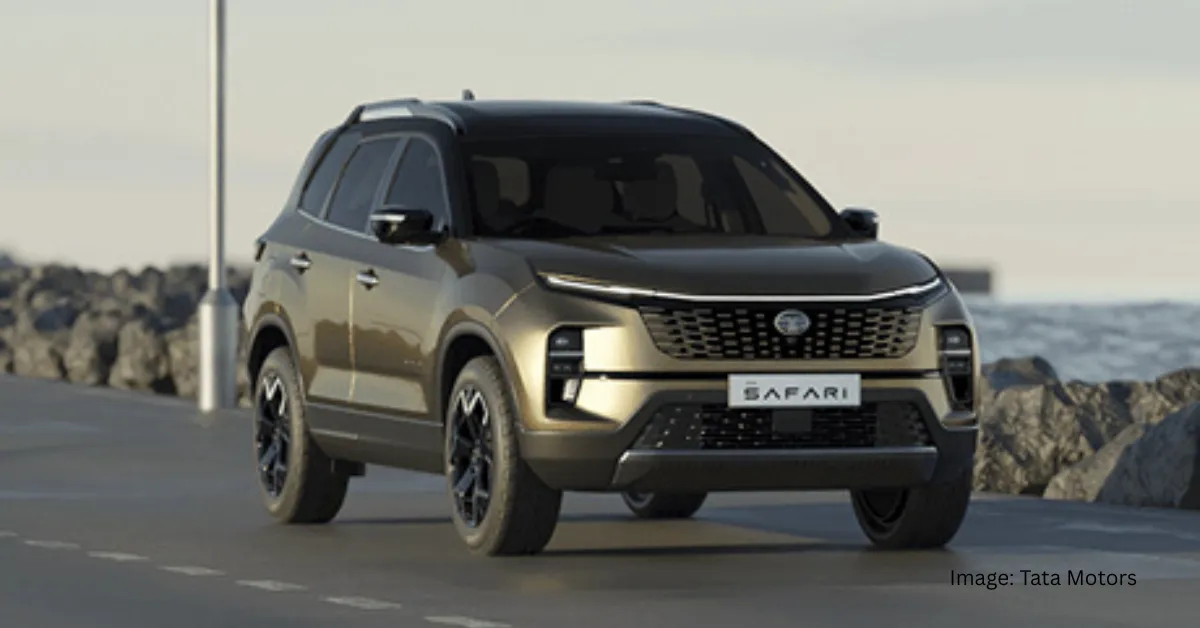

Tata Motors Limited has become one of India’s most exciting auto stocks to watch. After becoming debt-free in FY25 and completing its major demerger, the company is entering a new growth phase across electric vehicles (EVs), passenger cars, and commercial vehicles.
With strong performance from Jaguar Land Rover (JLR), rising EV demand, and India’s push for cleaner mobility, Tata Motors is well-positioned for the future. The key question now is — how high can Tata Motors go by 2030 and in the long run? Let’s find out in detailed.
About the Company
Tata Motors Limited, part of the Tata Group, is India’s largest automobile manufacturer by revenue and one of the global leaders in commercial and passenger vehicles. The company’s portfolio covers a wide range of segments — from affordable hatchbacks to luxury SUVs and heavy-duty commercial vehicles.
Business Model & Key Segments
Tata Motors follows a diversified structure through two primary divisions:
- Tata Motors Passenger Vehicles Ltd. (TMPV) – includes electric vehicles and JLR luxury brands.
- TML Commercial Vehicles Ltd. (TCV) – focuses on trucks, buses, and defense vehicles.
| Segment | Key Products | Highlights |
|---|---|---|
| Passenger Vehicles | Tiago, Tigor, Nexon, Harrier, Safari, Altroz | 14% domestic market share; focus on premium and EV categories. |
| Electric Vehicles (EVs) | Tiago EV, Nexon EV, Curvv EV | India’s leading EV brand with >50% share. |
| Jaguar Land Rover (JLR) | Range Rover, Defender, Jaguar XE | Contributes nearly 60% of global revenue. |
| Commercial Vehicles | Prima Trucks, Ace, Ultra Series, Buses | 40% market share; strength in logistics and infrastructure transport. |
With an expanding EV portfolio and a clear strategy post-demerger, Tata Motors is now focused on building leadership in clean mobility and connected technologies.
Fundamental Analysis
Financial Performance (FY25)
Despite global headwinds, Tata Motors achieved record-breaking results in FY25, becoming debt-free and improving its profitability margins.
| Financial Metric | FY25 (₹ Crore) | YoY Change | Key Insights |
|---|---|---|---|
| Revenue | 4,45,939 | +3.4% | Supported by JLR and EV growth |
| EBITDA | 60,200 | +5% | Margin at 13.5% |
| Net Profit | 31,799 | +11% | Highest-ever annual profit |
| EPS (Basic) | ₹89 | +9% | Reflects consistent earnings growth |
Key Valuation Ratios (FY25)
| Ratio | Value | Interpretation |
|---|---|---|
| P/E Ratio | 18x | Reasonable vs. auto peers |
| ROE (Return on Equity) | 19% | Strong shareholder returns |
| Debt-to-Equity | 0.1x | Practically debt-free |
| ROCE | 16% | Efficient capital deployment |
Shareholding Pattern
- Promoters: 46%
- FIIs: 19%
- DIIs: 26%
- Public: 9%
Strong institutional interest and consistent earnings growth continue to support valuation stability.
Past Stock Performance
Over the past five years, Tata Motors has turned from a turnaround story to a market outperformer. From ₹70 in 2020 to above ₹1,000 before its 2025 demerger, long-term investors have earned exceptional returns.
The EV revolution, JLR revival, and steady commercial vehicle demand have been key performance drivers. The demerger has now created two focused entities, unlocking value and strategic flexibility for the future.
Tata Motors Share Price Target 2025–2050
| Year | Minimum (₹) | Average (₹) | Maximum (₹) |
|---|---|---|---|
| 2025 | 420 | 750 | 1,050 |
| 2026 | 1,000 | 1,150 | 1,280 |
| 2027 | 1,180 | 1,320 | 1,480 |
| 2028 | 1,350 | 1,520 | 1,720 |
| 2029 | 1,520 | 1,740 | 1,950 |
| 2030 | 1,750 | 2,000 | 2,300 |
| 2035 | 2,600 | 3,100 | 3,700 |
| 2040 | 3,800 | 4,400 | 5,200 |
| 2045 | 5,000 | 5,900 | 6,800 |
| 2050 | 6,200 | 7,400 | 8,500 |
Tata Motors Share Price Target and Prediction 2025, 2026, 2027, 2028, 2029, 2030, 2035, 2040, 2045, 2050
Tata Motors Share Price Target 2025
Tata Motors’ share price target for 2025 is expected to reach up to ₹1,050. The stock may benefit from post-demerger recovery, strong electric vehicle (EV) adoption, and improved profitability at Jaguar Land Rover (JLR).
Tata Motors Share Price Target 2026
In 2026, Tata Motors could trade between ₹1,000 and ₹1,280, driven by 8–10% revenue growth and robust demand across domestic and international markets.
Tata Motors Share Price Target 2027
By 2027, Tata Motors is expected to cross ₹1,480 as the company scales up its EV portfolio, enhances export volumes, and maintains stable margins across its product lines.
Tata Motors Share Price Target 2028
For 2028, the share price of Tata Motors may reach around ₹1,720. Growth may come from stronger operating leverage, better cost control, and ongoing investments in hydrogen fuel technology.
Tata Motors Share Price Target 2029
In 2029, Tata Motors could touch ₹1,950 as India’s auto market accelerates and new-generation EV models boost both sales and profitability.
Tata Motors Share Price Target 2030
By 2030, Tata Motors’ share price may range between ₹1,750 and ₹2,300. The company’s goal of achieving 30% EV sales share and higher JLR margins could support these valuations.
Tata Motors Share Price Target 2035
In 2035, Tata Motors could reach an average target of ₹3,100 as the company benefits from consistent innovation, global expansion, and its leadership in sustainable mobility solutions.
Tata Motors Share Price Target 2040
By 2040, Tata Motors’ share price may rise to around ₹4,400 on average, backed by a mature EV ecosystem, advanced autonomous technology, and global brand strength.
Tata Motors Share Price Target 2045
In 2045, Tata Motors is projected to trade between ₹5,000 and ₹6,800, supported by global EV dominance and long-term earnings growth from premium and green vehicle segments.
Tata Motors Share Price Target 2050
By 2050, Tata Motors’ share price could reach up to ₹8,500, reflecting decades of innovation, global leadership in clean mobility, and sustained financial performance. The company’s commitment to sustainability and R&D could make it a long-term wealth creator for investors.
Market Sentiment and Analyst Perspective
Brokerages like ICICI Securities, Motilal Oswal, and Nomura remain bullish on Tata Motors’ long-term outlook.
Analysts expect earnings to grow 8–10% CAGR, driven by:
- Strong EV adoption in India
- JLR’s steady performance
- Profit margin expansion post-demerger
Consensus rating: BUY / ACCUMULATE across both entities (TMPV and TCV).
Risks and Challenges
- Raw material and commodity price volatility affecting margins
- Global slowdown risk impacting JLR exports
- Intensifying competition from EV-focused players like Hyundai, BYD, and Mahindra
- Technological disruption and high R&D costs
- Regulatory and policy uncertainties in emission and EV infrastructure norms
Investment Suitability
Tata Motors is best suited for long-term investors with a moderate-to-high risk appetite.
It offers strong exposure to:
- India’s EV transition
- Infrastructure growth and commercial vehicle demand
- Premium auto market through JLR
Investors looking to hold for 5–15 years could benefit from both capital appreciation and the company’s strong earnings trajectory.
FAQs
1. What will be the share price of Tata Motors in 2040?
By 2040, Tata Motors’ share price could range between ₹3,800 and ₹5,200 based on consistent revenue growth and EV leadership.
2. Will Tata Motors touch ₹1,000 again?
Yes. With robust earnings and strong fundamentals, Tata Motors (TMPV) is expected to comfortably cross ₹1,000 after its post-demerger consolidation phase.
3. What is the 10-year return of Tata Motors?
Between 2025 and 2035, Tata Motors could generate 150–200% returns, assuming steady revenue growth and margin expansion.
4. What is the future plan of Tata Motors by 2030?
By 2030, Tata Motors aims for 30% of sales from EVs, increased global presence, and enhanced profitability from its JLR and commercial segments.
5. Why is Tata Motors 40% down recently?
The correction is due to demerger-related adjustments and temporary profit booking, not a fundamental weakness.
Conclusion
Tata Motors is entering a new era of growth with a strong balance sheet, focused business structure, and clear EV vision. Its strategic demerger, leadership in both passenger and commercial vehicles, and premium JLR brand collectively position it as a long-term wealth creator for Indian investors.
While short-term fluctuations may continue, its long-term outlook remains positive, making it a strong candidate for investors with patience and conviction.
To monitor real-time stock performance and movements, visit screener.in.